
What is Sickle Cell Disease?
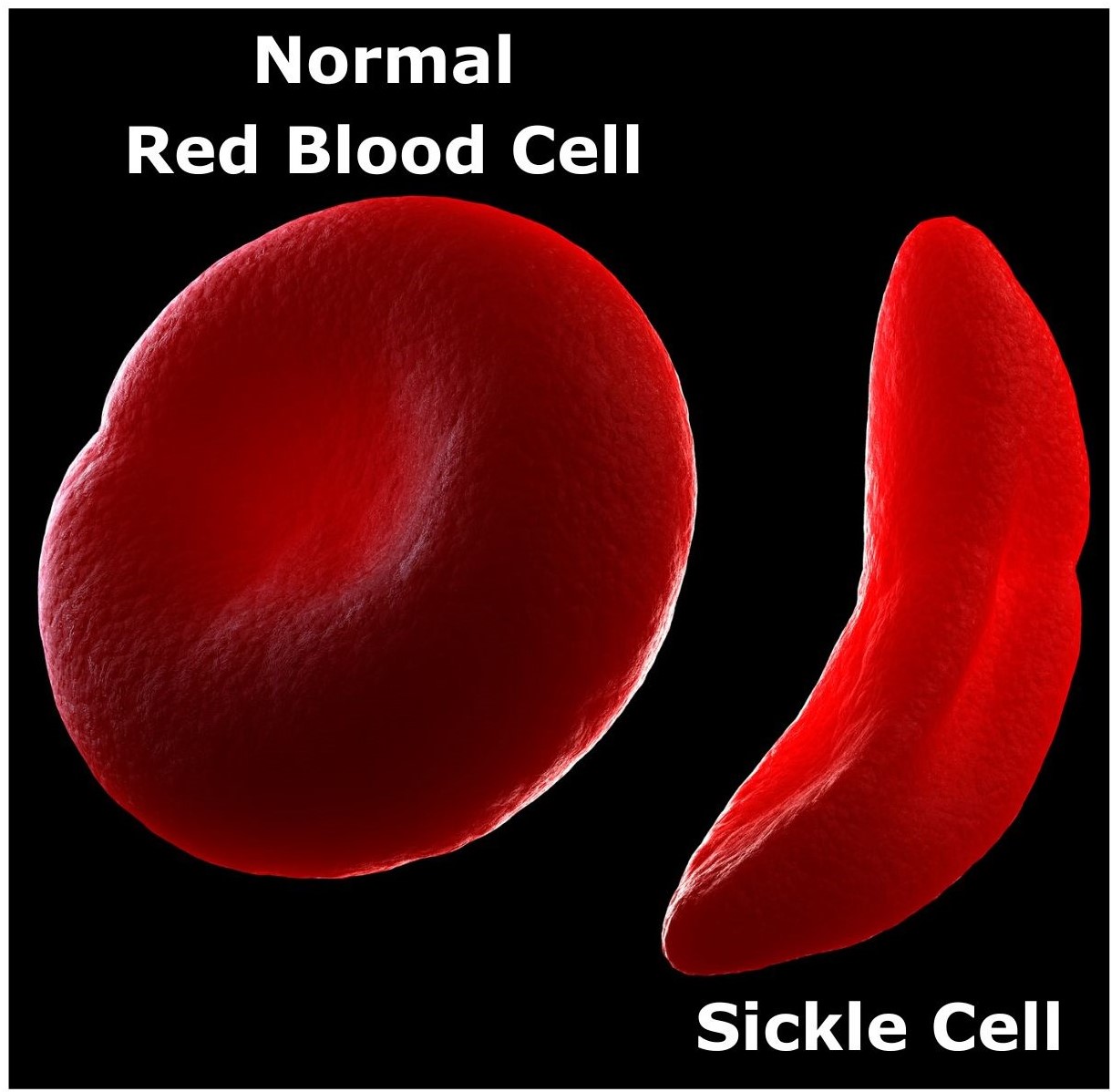
Sickle cell disease is a group of inherited blood disorders resulting in abnormal hemoglobin. Hemoglobin is found in red blood cells and is a protein that carries oxygen. Abnormal hemoglobin from sickle cell disease causes red blood cells to become hard, sticky, and sickle-shaped. This can cause severe pain, chronic fatigue, stroke, serious infections, and organ damage.
There are several types of sickle cell disease, often referred to as sickle cell disease genotypes. Which genotype of sickle cell disease someone has depends on the genes they inherited from their parents. Some genotypes of sickle cell disease are more severe than others. In Texas, approximately 200 babies with sickle cell disease are identified each year by newborn screening.
For more information, please visit the Texas Newborn Screening Sickle Cell Page at Sickle Cell Disease | Texas DSHS.
SCD Genotype | Information |
|---|---|
| Hemoglobin SS or HbSS | HbSS is the most common type of sickle cell disease (SCD). A person with HbSS inherits two genes, one from each parent, that code for hemoglobin "S." Hemoglobin S is an abnormal form of hemoglobin that causes the red blood cells to become rigid and sickle shaped. This is commonly called sickle cell anemia and is usually the most severe form of the disease. |
| Hemoglobin SC or HbSC | A person with HbSC inherits a hemoglobin S gene from one parent and a gene for a different type of abnormal hemoglobin called "C" from the other parent. This is usually a milder form of SCD. |
| HbS beta+ thalassemia | A person with HbS beta+ thalassemia inherits a hemoglobin S gene from one parent and a gene for beta thalassemia, another type of hemoglobin abnormality, from the other parent. A person with HbS beta+ thalassemia produces varying amounts of hemoglobin A. HbS beta+ thalassemia is a milder form of SCD. |
| HbS beta0 thalassemia | A person with HbS beta0 thalassemia inherits a hemoglobin S gene from one parent and a gene for beta thalassemia, another type of hemoglobin abnormality, from the other parent. A person with HbS beta0 thalassemia does not produce hemoglobin A. HbS beta0 thalassemia is a more severe form of SCD. |
| Other SCD Disorders | Hemoglobin SD (HbSD), hemoglobin SE (HbSE), and hemoglobin SO (HbSO) are other types of sickle cell disease. A person with one of these forms of SCD inherits one hemoglobin S gene and one gene that codes for another abnormal type of hemoglobin ("D," "E," or "O"). These are very rare forms of SCD with varying severity. |